
Why habits fail
How to Track Habit Progress You Can Actually See
Short answer
Track the action you control, the trend created by repeated actions, and occasional outcome milestones. Do not rely on the distant outcome alone. A useful progress view answers three questions: What did I do, what changed, and what is the next action?

Separate actions from outcomes
Many habits are attached to slow outcomes. Reading today does not instantly produce expertise. One workout does not visibly change long-term fitness. One focused session does not finish a thesis.
Track two different layers:
- Action measures record the behavior you completed, such as sessions, pages, or minutes.
- Outcome measures record the result you ultimately care about, such as a finished chapter or a performance milestone.
Action measures provide frequent feedback. Outcome measures confirm whether the direction still makes sense. Confusing the two can make real effort look like no progress at all.
Monitoring works best when it changes the next decision
A meta-analysis of 138 studies with 19,951 participants found that interventions designed to increase progress monitoring improved goal attainment on average. The value is not in collecting numbers for their own sake. Monitoring creates a chance to compare the current state with the goal and adjust behavior. Read Does Monitoring Goal Progress Promote Goal Attainment?.
Build a compact progress view:
- Record the completion immediately.
- Review a short recent window rather than judging one day in isolation.
- Mark meaningful milestones, not every possible statistic.
- Use the result to choose the next action or adjust the action size.
Do not let the streak become the goal
Streaks are easy to understand, but they are brittle. A single interruption can make a long period of work feel erased. Keep lifetime completions, accumulated milestones, or another durable measure beside any streak.
Progress should survive a missed day. The record exists to show the work, not to manufacture guilt.
Add meaning without inventing precision
Game progression can translate completions into levels, equipment, or access to a new challenge. This creates a visible representation of accumulated actions. It does not mean that a character level is a scientific measurement of health, knowledge, or personal worth.
Use the game number as feedback about participation. Use real-world outcome measures for the result itself.
How Habit Dungeon applies the idea
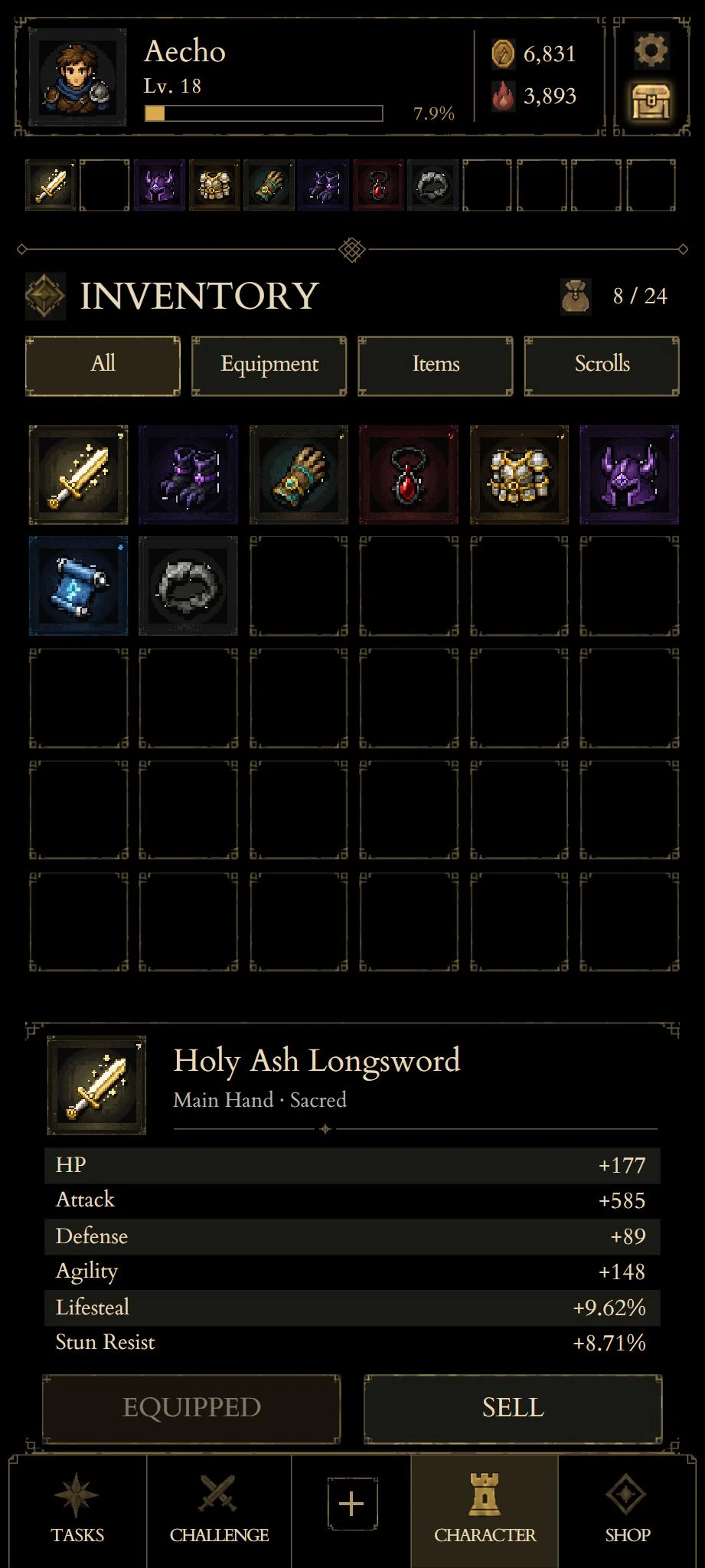
Habit Dungeon turns completed habits into XP, coins, loot, character levels, stats, equipment, and combat power. These systems preserve a visible record that continues beyond one streak. Dungeons and leaderboards create later milestones where accumulated progress can be used.
Explore the Habit Dungeon features to see which forms of progress are currently visible in the product.
For the feedback layer behind that system, read Immediate Feedback for Habit Building. For the role of levels and rewards, read Gamified Habit Progress.
Source
- Benjamin Harkin and colleagues, Does Monitoring Goal Progress Promote Goal Attainment? A Meta-Analysis of the Experimental Evidence.
First-party product example
What this looks like in Habit Dungeon
Character level, equipment, stats, and combat power provide a durable record of in-app progression. They represent accumulated participation, not a scientific measure of the real-world outcome.
Keep reading
Related guides

Gamified Habit Progress: Using Levels and Rewards
Game progression is most useful when it makes completed work visible and keeps the real action at the center.
Read guide
Immediate Feedback for Habit Building: How It Works
Good feedback confirms the action, shows what changed, and points attention back to the next useful repetition.
Read guide